
200,000 Men — A Story Almost Untold
The Story Almost No One Knew
A Complicated Legacy
Service, Sacrifice, and Segregation
More than 200,000 African American men served in the Civilian Conservation Corps between 1933 and 1942 — roughly 10 percent of total enrollment. They planted trees, built parks, fought fires, and laid telephone lines through America's forests and public lands. They did the same work. They endured the same long days, the same physical demands, the same separation from family. But they did it in separate, segregated camps — under white officers, with fewer advancement opportunities, and often in inferior facilities.
The Emergency Conservation Work Act contained a clause prohibiting racial discrimination in enrollment — a provision pushed through by Black civil rights organizations and endorsed on paper by the Roosevelt administration. In practice, the clause was largely ignored. Local selection boards in Southern states routinely limited African American enrollment. In the South, segregation in camps was total and strictly enforced. Even in the North and West, integration was rare and unofficial. Black enrollees could join but were channeled into all-Black companies with restricted paths to leadership.
Despite discrimination, the CCC provided critical income, education, and skills training for Black families during the Depression's worst years. For hundreds of thousands of young men, it was the first steady wages they had ever earned — wages that flowed directly home to families who had no other income. The Corps gave them skills, physical strength, discipline, and self-respect — even as the system around them withheld full equality.
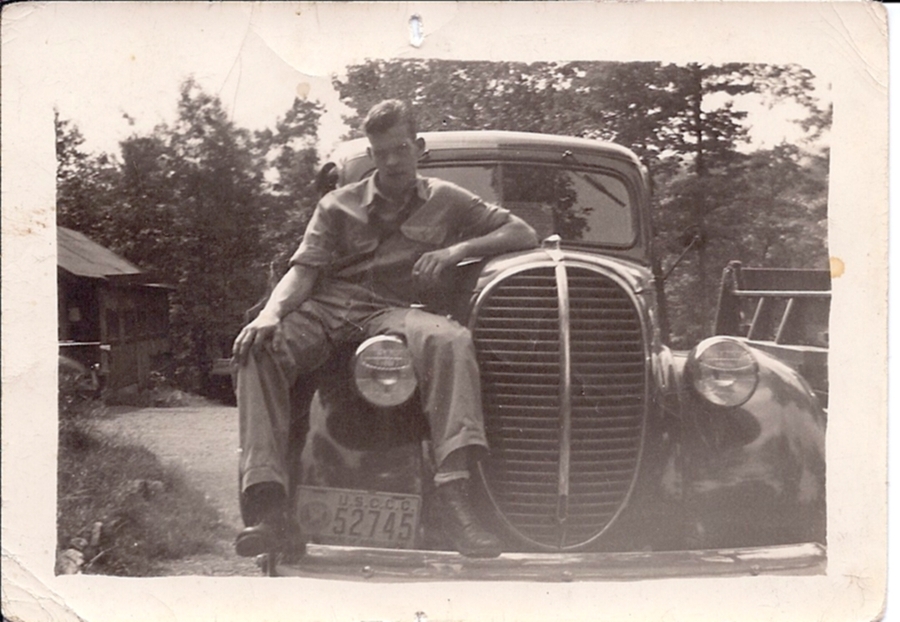
A CCC company in Virginia, 1930s. More than 200,000 African American men served in the CCC — in segregated camps, under white officers, doing the same work.
Voices of Wolf Gap
Company 333 — The Story Almost No One Knew
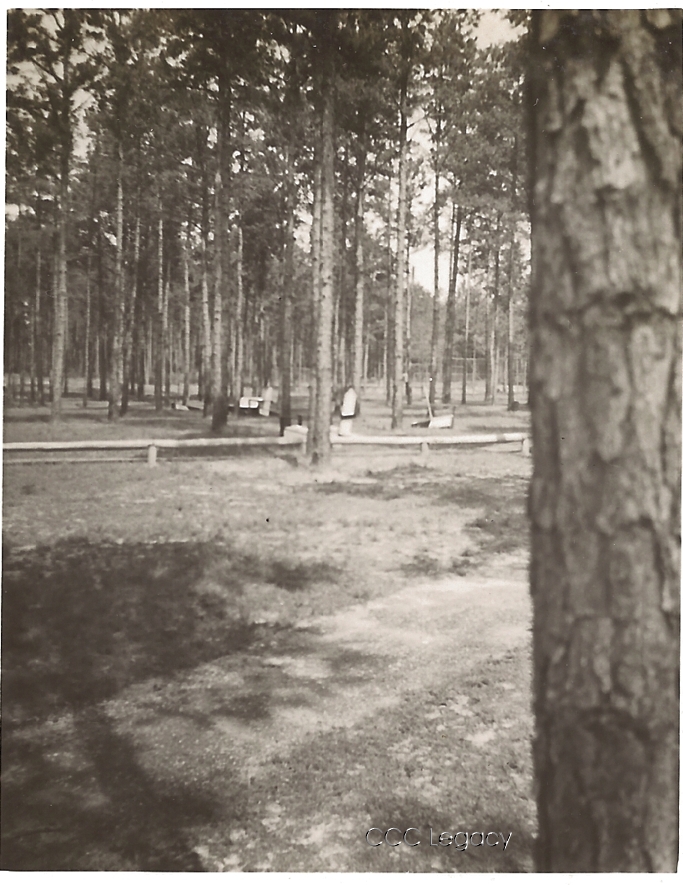
A CCC-built recreation area in Virginia's George Washington National Forest — representative of the trails and facilities built by the men of Company 333 at Wolf Gap.
Among the most significant African American CCC companies was Company 333, stationed at Camp Wolf Gap in the George Washington National Forest near Wardensville, West Virginia. Camp Wolf Gap opened in 1933 and transitioned to an all-African-American camp in 1934, operating as such until it closed in October 1937. During those years, the men of Company 333 built the trails, roads, shelters, and facilities of the Wolf Gap Recreation Area — including the trail network that leads to the Big Schloss overlook, one of the most-visited destinations in the Shenandoah Valley.
They did this work in conditions of enforced segregation. They lived in separate quarters, ate in separate mess halls, and were supervised by white Army officers. They received the same $30 monthly pay — $25 of which went home to families — but faced restrictions that white enrollees did not. They could not be promoted to officer ranks. Their educational opportunities were often more limited. The work was identical. The recognition was not.
For decades, Company 333's contributions went unacknowledged on the interpretive signs along the trails they built, the shelters where hikers rest, and in the official histories of the George Washington National Forest. CCC Legacy has worked to restore this record — to ensure that when visitors walk to the Big Schloss overlook, they know whose hands built the path beneath their feet.
"We did the same work. We built the same parks. We planted the same trees. We just didn't get the same credit — and that's the part history forgot."
The Indian Division
Native Americans and the CCC
Approximately 80,000 to 88,000 Native American men participated in the CCC through a parallel program — the Indian Division (CCC-ID), administered by the Bureau of Indian Affairs rather than the Department of Labor. Over 14,000 had already enrolled by July 1933. The Indian Division operated separately from the main CCC, with work focused on reservation lands: irrigation systems, erosion control, range improvement, and land reclamation on territories that were once exclusively Indigenous domain.
Unlike standard CCC enrollees, Native American participants were not required to be single or to live in camps — they could be married and commute to work sites from home. This reflected both the distinct structure of the Indian Division and a recognition that removing Native men from reservation communities would disrupt kinship and social structures essential to those communities. The program helped Indigenous families weather the Depression while keeping men connected to their lands and people.
Before the program's termination in 1942, between 80,000 and 88,000 Native Americans had participated in reclaiming and restoring reservation lands. Like the contributions of African American enrollees, the work of Native American CCC participants has received less historical attention than its scale and significance deserves.
Who Was Left Out
The Women the CCC Never Enrolled
Women were excluded from the Civilian Conservation Corps entirely. The program was designed explicitly for unemployed young men — a decision that reflected both the gender norms of the era and the political calculation that supporting male breadwinners would most efficiently stabilize Depression-era households. Eleanor Roosevelt advocated repeatedly for a women's conservation corps. No such program was ever established under the CCC banner.
Some women found work through parallel New Deal programs — the Works Progress Administration, the National Youth Administration — but the CCC's combination of outdoor conservation work, military-style organization, and direct family income was never extended to women. That exclusion is part of the CCC's complicated legacy: a program that transformed millions of lives and the American landscape, while leaving behind, by design, half the population.